• Skip to primary navigation
  • Skip to main content
  • Skip to primary sidebar

Adam Fletcher Adventure Series

Bestselling, family-friendly historical fiction set on the colonial North Carolina coast

  • Home
  • The Author
  • Blog

RevWar

Review ” The Smuggler’s Gambit “captivates the reader’s imagination”

Advance copies of The Smuggler’s Gambit circulating ahead of its March 20, 2015 release are garnering lots of good feedback so far.

Children’s Literature has written this review:

“With a seamless plot and vivid characters, this novel set in Port Beaufort, North Carolina in 1765, captivates the reader™s imagination. When seventeen-year-old Adam Fletcher chooses to recklessly defend his single mother™s reputation with his quick temper and fists, he is given two choices”jail or an apprenticeship. The delinquent™s only consolation is the hope that he will work under the flashy Richard Rasquelle, a local hero and a successful port merchant. Adam, however, lands in the care of the elder Emmanuel Rogers, a staid member of the coastal colony and only competitor of Rasquelle. It does not take long for Adam™s impetuousness to land him in a tangled web of spying, betrayal, and life-threatening danger. When Adam finally uncovers the true evil players and why his boss, Mr. Rogers, has landed in jail, he is being led away to a deserted coastal island by kidnappers. Readers will not be able to put down this historically accurate tale until they discover how Adam redeems himself and reveals the truth.”

BIBLIO: 2015, Seaport Publishing, ages 15 – 18, $14.95
REVIEWER: Krisan Murphy
FORMAT: Fiction
ISBN: 978-0-9863252-0-5

What kinds of things were imported to Port Beaufort, North Carolina in 1765?

The Smuggler’s Gambit is set in 1765 in what was at the time known as Port Beaufort (modern day Beaufort, NC).

Although Port Beaufort was positioned right on the coast of North Carolina, it wasn’t a place that saw heavy shipping traffic. This is because Beaufort had no means of connecting to points further inland. In other words, there were no rivers that ran directly from Port Beaufort into North Carolina’s interior. They received the same sorts of items as other colonial ports, only less frequently.

The fact that imports coming into Port Beaufort were intended only for the surrounding region, and that they came less frequently than some other ports, made it the ideal setting for my novel.

There were certain factors that had to be in place, and Port Beaufort fit the bill perfectly. I don’t want to give anything away, so I won’t talk about all of that now.  You’ll have to wait until you read the book.

Something I will talk about is this: The colonial capitol of New Bern, unlike Beaufort, was a bustling port. This was in spite of the fact that it was about 50 miles from the sea. New Bern had the good fortune of being seated at the confluence of two major waterways ” the Neuse River and the  Trent River ” which allowed imported items to be easily carried along those rivers to their inland destinations.

In my research, I spent a great deal of time poring over old newspapers from the 1760s in an effort to learn all that I could about eastern North Carolina in the volatile period between the end of the French and Indian War and the start of the American Revolution. I’ve read Stamp Act notices, news items about sinking vessels, lists of ships that recently arrived in nearby ports, and items imported from England.

I was interested in knowing just what kinds of items folks would have wanted to buy that, perhaps, couldn’t have been obtained locally.

One list dated January 1765 lists a wonderful array of items that, in essence, served as a sort of colonial mail order catalog. Some of the items include various sorts of fabric, spices, sugar, flat irons, candlesticks, jewelry and hats.


The_Newbern_Gazette_Fri__Jan_18__1765_Imports_from_London_and_Liverpool-WEB

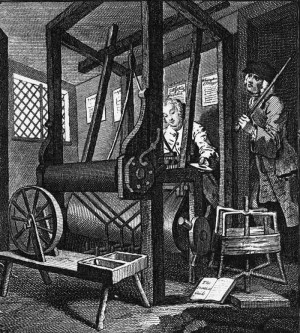
Apprenticeships in Colonial America: Educational opportunity or cheap labor? It all depends…

Unfortunately, many apprentices were mistreated and used as cheap labor for their masters. Other apprentices, on the other hand, benefited greatly from being able to not only learn a trade, but develop the skills needed to successfully run such a business, themselves.
Unfortunately, many apprentices were mistreated and used as little more than cheap labor for their masters. Conversely, other apprentices benefited greatly from being able to not only learn a trade, but develop the skills needed to successfully run such a business, themselves.

In The Smuggler’s Gambit, 17-year-old Adam Fletcher is the son of a young, single mother in a port town in 1765 North Carolina.

When he finds himself in trouble with the law, he is forced into an apprenticeship to avoid a harsher criminal punishment. As events unfold in his new life with a local shipping merchant as his master, Adam soon finds himself caught in the middle of a smuggling war.

The decisions he’s forced to make question his loyalties, his honor, his courage and ultimately his will to survive.

How real life intersects with The Smuggler’s Gambit

It’s as though Arthur Butler had no history before that fateful Saturday on the seventh of April 1764.

In fact, the first piece of documentary evidence of my fifth great-grandfather’s life was his apprenticeship bond. At age 16, he appeared in the Craven County magistrate’s office where he was made an apprentice to a rigid man who lived in Swift Creek named Thomas Swafford.

Swafford wasn’t from Swift Creek. In fact, he was a lapsed Quaker who had come into the North Carolina colony from Pennsylvania when he was younger.

It was uncovering these evidences, and the ones that followed, that ultimately led me to write The Smuggler’s Gambit.

Arthur’s father had been a shoemaker, I think. A lot of the boys in the Butler family were ” at least it appears that way from looking at Butler estate records in the surrounding counties.

But Arthur, well, he was a bit of a mystery.

I was delighted when I first found his apprenticeship bond in the Craven County records, but my joy was quickly turned to sadness when I saw that just four years later, in June 1768, Arthur returned to the Craven County court to complain about his master:

Arthur Butler complains that Thomas Swaffer [Swafford?] is keeping him at servile labor and not teaching him to be a cordwinder.”

By September, the Craven County authorities intervened on my ancestor’s behalf:

Ordered that Arthur BUTLER formerly Bound apprentice to Thomas Swaffer be discharged from his Indentures it appearing to the Court that the said Arthur hath not been treated as an apprentice Ought to be, And that he be bound to Charles ROACH untill he arrive to Twenty One Years to Learn the Shoemakers Trade.”

More questions than answers

Was my ancestor being abused? The ‘servile labor’ mentioned indicates he was being used like a servant and wasn’t being taught the trade. He was less than a year from the end of his apprenticeship when he made his complaint to the court. How long had this been going on? What made things get so desperate that he finally went forward to have his apprenticeship changed?

Why was he made an apprentice at the age of 16 in the first place? His apprenticeship bond doesn’t name any parents, even though they usually named at least the father or mother.

Was Arthur an orphan? Or was he one of the misfortunate children of a single mother who was forcibly taken by the county and placed into an apprenticeship?

After nearly a decade of research, I’ve never been able to satisfactorily answer those questions about my ancestor’s origins, although I did learn what came after his apprenticeship was transferred and how things turned out for him in his life.

He ended up marrying the beautiful daughter of a wealthy, local landowner and county court justice, he served in the American Revolution, and they had several children. It was a true rags to riches story,

In fact, several years ago, I began working on a novel that was loosely based on the life of Arthur Butler. I worked on it on and off until early 2014, but finally abandoned it when I realized what I was writing was more of his biography than it was a novel.

Nevertheless, the whole concept of apprenticeships really caught my attention.

I ended up coming up with an idea that combined both the elements of what was happening in America at the time my ancestor was apprenticed, along with some local history and information I knew about several of my other colonial-era ancestors and their associates, and the result was The Smuggler’s Gambit.

Will Turner and Elizabeth Swann
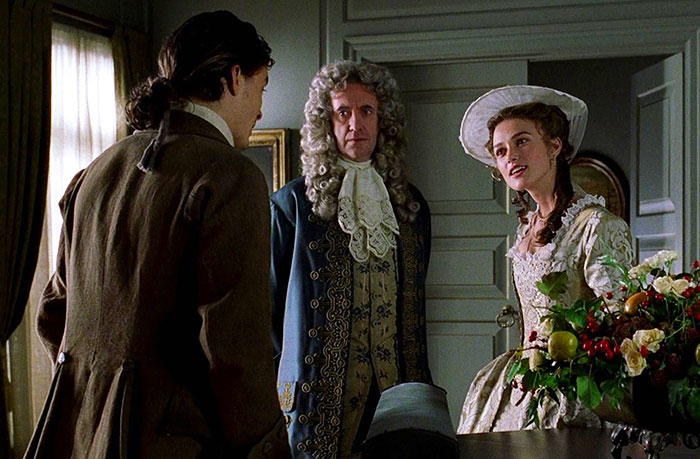
In popular culture, one might think of Will Turner, the bladesmith apprentice who delivers a spectacular sword to Governor Swann before Col. Norrington’s promotion ceremony in Pirates of the Caribbean. As far-fetched as it might seem that a lowly apprentice could win the heart of a young lady from the upper classes, it did sometimes happen, as was the case with my own ancestor, Arthur Butler, and his bride, Sarah Johnston. She was the daughter of a wealthy, local landowner and county court justice, Jacob Johnston.

Forced Apprenticeships

Growing up, I always just thought about an apprenticeship as a means for a young person to learn a trade. It was the way things were done.

What I did not realize, however, at least not until I started researching apprenticeships in colonial North Carolina, is that often, apprenticeships were a forced enterprise.

This is a photocopy of the apprenticeship bond of my ancestor, Arthur Butler.

In 1762, the law in North Carolina stated the following:

Where the estate of an orphan shall be of so small value that no person will educate and maintain him or her for the profits thereof, such orphan shall, by direction of the court, be bound apprentice, every male to some tradesman, merchant, mariner or other person approved by the court, until he shall attain to the age of twenty one years, and every female to some suitable employment, till her age of eighteen years; and also such court may, in like manner, bind apprentice all free base-born children, and every such female child, being a mulatto or mustee, until she shall attain the age of twenty one years: And the master or mistress of every such apprentice shall find and provide for him or her diet, clothes, lodging and accommodations, fit and necessary; and shall teach, or cause him or her to be taught to read and write; and at the expiration of his or her apprenticeship, shall pay every such apprentice the like allowance as is by law appointed for servants by indenture or custom, and on refusal shall be compelled thereto in like manner; and if upon complaint made to the inferior court of pleas and quarter sessions, it shall appear that any such apprentice is ill used, or not taught the trade, profession or employment to which he or she was bound, it shall be lawful for such court to remove and bind him or her to such other person or persons as they shall think fit.

In other words, if a child was orphaned (and an orphan was typically considered a child without a father, regardless of whether or not the mother was still living) regardless of ethnicity, or if they were ‘base-born’, or female mixed-ethnicity children, they were to be bound out, no matter what.

Just to be clear, here are what those old genealogical terms mean:

Base Born “ An œillegitimate child. (A child whose parents are not married.)

Mulatto “ A person with mixed parents ” black and white, although at times may have indicated black and Indian.

Mustee “  A person with mixed parents ” Indian and white. (Short for œmestizo, the Spanish term for children of one Indian and one white parent.)

The colonies didn’t pass these laws out of cruelty, although the end results might have sometimes been cruel, nonetheless.

The practical reasoning behind the law was two-fold: First, to ensure that children who might otherwise not have someone teach them, be bound to a master and taught an industrious trade whereby they could enjoy a successful future. By learning to be self-sufficient, they wouldn’t become a burden on the colonies.

Second, the apprenticeship system provided a cheap labor-force for businesses. It was thought to be a mutually beneficial arrangement since the apprentice would be housed, clothed, fed and trained in a profession while the master enjoyed having an otherwise unpaid worker who lived on the premises and had to work how and when he was told.

Some people were bound from the time they were very small, in which case it could almost be compared to an adoption more than just an apprenticeship. Others weren’t bound out until they were teenagers.

Issues of Illegitimacy

I’m unfamiliar with laws from other colonies relating to unmarried women having children, but in North Carolina, ‘bastardy bonds’ were issued.

According to this website:

These bonds were intended to protect the county or parish from the expense of raising the child. When the pregnancy of a woman or birth of a child was brought to the attention of the court, a warrant was issued and the woman brought into Court. She was examined under oath and asked to declare the name of the child’s father. The ‘reputed’ father was then served a warrant and required to post bond. If the woman refused to name the father, she, her father or some other interested party would post the bond. In some cases, the mother and reputed father together posted the bond. If the woman refused to post bond or declare the father, she was often sent to jail.”

Illegimate children, or children whose fathers were not present, were always placed in forced apprenticeships unless someone in the mother’s family or circle of friends was willing to post a bond for the said child and act as surety for their welfare and upbringing.

In The Smuggler's Gambit, Adam Fletcher has grown up in a tavern, but when he gets in trouble with the local authorities, he is forced into an apprenticeship.
In The Smuggler’s Gambit, Adam Fletcher has grown up in a tavern, but when he gets in trouble with the law, he is forced into an apprenticeship.

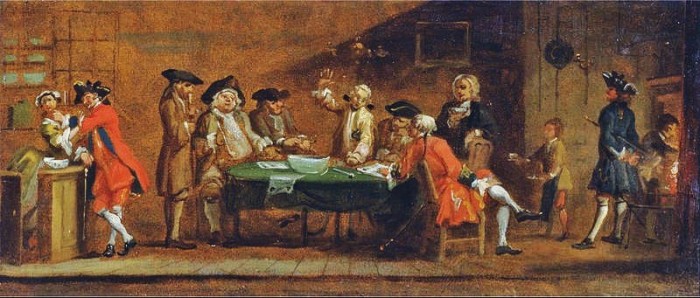
In The Smuggler’s Gambit, Adam’s grandfather-figure and owner of the Topsail Tavern, Valentine Hodges, had stepped in as surety for Adam’s mother, Mary, since his father was not around. But when Adam ran afoul of the law, the county magistrate wouldn’t even consider allowing him to be apprenticed to Valentine. Colonial authorities didn’t see taverns as morally upright places, so some apprentice bonds would actually go so far as to forbid the youngster from visiting taverns or public houses. That was a very real worry for Adam when he was told he’d be made an apprentice.


Coopers in Colonial America – Everything You Wanted to Know

Cooper's Trade in Colonial America

The Smuggler’s Gambit is set in 1765 and deals with shipping and smuggling, so one of the key trades in that line of work was coopering. In fact, when Adam Fletcher begins his apprenticeship with a local shipping merchant, the area in which he begins his training is as a cooper.

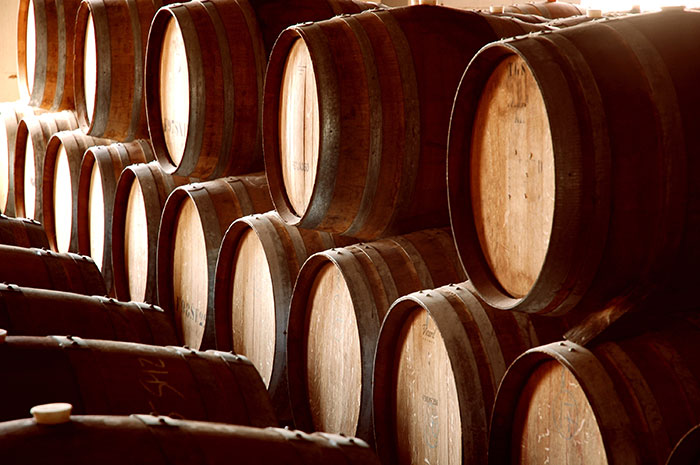
Coopers in Colonial America were standard fixtures on ships, as well as on plantations, breweries, wineries, distilleries and any other industry that required containers for the commodities they produced.

To put it in modern terms: You know those big shipping containers that bring stuff to your local Wal-Mart? Or how about those beautiful brown boxes that come to your door from Amazon.com? Well, in the 1700s, all of those containers would’ve been made of wood, and they would’ve been shaped like barrels ” made by coopers.

I had ancestors in the 1700s who were coopers, and while I have their estate records naming all of the tools they owned, until recent months, I had limited understanding of how they were all put into practice.

While I knew that casks (or barrels, as we might commonly call them today) were used to store virtually everything in colonial times: dried grains, salted meats (pork, beef, fish), wine, rum, tobacco, naval stores (pitch, tar), gun powder, various merchandise, etc.., I wasn’t sure what the typical process would be if one wanted to learn the cooper’s trade.

In my research, I have found a whole wealth of information on the cask-making process, so I thought I’d share some of it here.

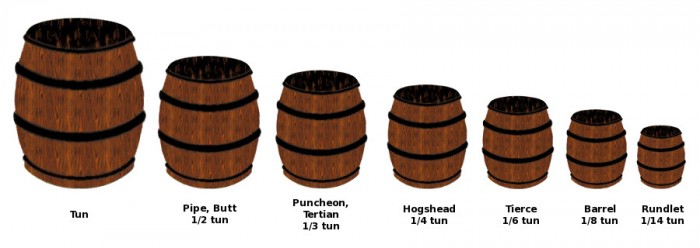
One of the first things I learned is that not all things that look ‘barrel’-shaped are actually barrels. There are also tuns, pipes, puncheons, hogsheads, and so forth, all named depending on their size and purpose.

English Wine Cask Units from Wikipedia


I also learned that there is a difference between wet coopering and dry coopering. As you might guess, wet coopering involved making containers that would hold liquids, while dry coopering produced containers that held dry substances such as tobacco or gun powder.

This website does a thorough job of discussing the trade, as well as the cask-making procedure. 

This video shows some of the tools of the trade in action, as well as demonstrates some of the processes:

Even after watching the video, and reading several websites about coopers and barrel-making, I still had questions. Fortunately, I knew where I could turn for answers.

Colonial Williamsburg to the Rescue

Colonial Williamsburg is one of my favorite places to get in the 1700s mood. Just walking through the historic district makes me feel as if I’ve traveled back through time to when America’s founders were busily crafting the Declaration of Independence and a Revolution was brewing. There are many costumed reenactors walking the grounds, and the (almost complete) absence of cars and modern conveniences allows one to really soak in what life in the colonies might have felt like in the period.

The official website for Colonial Williamsburg offers a great wealth of information, but I’ve found that if I need to know something that goes a little bit deeper than what they have available on their public site, there is almost always someone willing to provide me with more details, or point me in the direction of where I can find them.

Jonathan A. Hallman, a Journeyman Cooper with the Colonial Williamsburg Foundation (CWF), was one such person. A few weeks ago, he was gracious enough to answer several questions for me in great detail.

Please keep in mind, while there were many commonalities among coopers everywhere, these answers are particularly relevant to the plantation society in the vicinity of the James River and Colonial Williamsburg, so there may be differences depending on where a cooper lived, or what industry employed him. For instance, some of the answers provided might not be applicable to a ship’s cooper.

Questions and Answers with Journeyman Cooper Jonathan A. Hallman

If a cooper’s shop knew they needed to produce a certain quantity of casks by a certain date, how might they organize their tasks to assure they get it done on time? Would they shape all of their staves first, and then move through the steps for all of the barrels in sequence, or would they just move forward making one barrel at a time?

In most circumstances, individual coopers worked on a single container from start to finish. Since they were normally paid piecework, they wouldn™t want to go any length of time without actually producing finished pieces. In addition, because the work is all done visually (no patterns or calculations), the check is to see the pieces go together. If you shaped staves for a bunch of casks before assembling them, it would be easy to start to drift slightly from the correct shape, and then you™d end up with a lot of extra work to do later. The key would be to ensure you had sufficient staff to achieve the necessary production. Having said that, most coopers making barrels were working on site for a specific industry (at a brewery, for instance), and were constantly producing casks, so that the finished containers could simply be drawn from stock whenever needed.

Was everyone in a cooper’s shop typically doing the same kind of work? I mean, if there were a few men, would they all be shaping staves at the same time, or might it be that each would be handling a different part of the barrel-making process?

Again, the usual method would be œone person, one barrel so in a given shop you could have individuals at different stages of the process depending on how efficiently each person worked. An exception to this rule could be found on plantations with slave coopers, who were sometimes employed in gangs where tasks were divided up. This tended to work only in the case of the manufacture of containers like tobacco hogsheads which didn™t have to be terribly well made in the first place.

Regarding the heating and bending of staves ” would it be likely that a cooper’s shop might have multiple chimneys for this purpose, or would they be done one at a time?

A large working cooperage would typically have what was referred to as a œchimney corner that was essentially a fireplace large enough for several people to walk into and truss (heat and bend) a couple casks at a time.
How long does the heating process take for the kinds of barrels/casks/hogsheads that would’ve held tobacco, rum, molasses, etc?

The fire used to heat a cask through is sized in relation to the cask being bent, so the heating time tends to be roughly the same regardless of the size of the cask. It should take about 20 minutes or so to heat the wood to the point where it is pliable enough to bend.

I’ve heard there were sizing hoops, then final hoops were made on site. I’m assuming the sizing hoops were made of iron. From what materials were the final hoops typically made? (Not for gunpowder, but for commodities as mentioned above.) If they were iron, would that mean a cooper’s shop would typically have a blacksmith on staff, or would they contract those items from another tradesman?

The final hoops could be made either of metal (usually iron, but copper or brass in the case of gunpowder), or of wood. In either case, making those hoops was part of the cooper™s work. In the case of iron hoops, the material was produced and sold as coopers hoop iron by mills (the same ones that produced nail rod for smiths, etc.) and purchased by the cooper. The bending and riveting to form that material into the hoops is done cold. In the case of wooden hoops, which were very common on tobacco hogsheads and casks for other dry goods exported from the colonies, they were made primarily from saplings split in half and bent while green, and notched at either end in order to hold the ends together. You might want to check out the albums œRiveting and œWooden Hoop Making on the Facebook page to get a little more feel for these.

If someone were brought into a cooper’s shop as an apprentice, what would be some of the first tasks he’d be trained in? Or would he be expected to just dive right in for whatever kind of work was being done at the time?

Usually an apprentice would be put to work fairly quickly, as the idea was to train the apprentice as quickly as possible and then to make money off of his (or her) labor for as long as possible within the overall timeframe of the apprenticeship. Developing the skills meant building one skill on top of another, so the apprentice would normally be giving one particular task to start with “ hollowing staves, for example. Once that skill was well developed, another “ backing staves “ would be added. One by one, skills were added until ultimately the apprentice had all the skills necessary to produce the finished product. While this learning process was going on, the tradesman teaching the apprentice would be watching over the work, and stepping in whenever necessary to ensure that the material wasn™t wasted and the finished product was still sellable.

How many containers could likely be made in a day in a cooper’s shop with four coopers and an apprentice?

It depends on the type of container, and it depends on the day. Thomas Jefferson wrote in 1800 that he expected the coopers at his grist mill to turn out an average of 5 flour barrels a day each. He did not specify the length of the work day, however, and his comments suggest (though they don™t clearly state) that other slaves were doing some rough shaping of the stock before it was given over to the coopers to finish the casks. Rum could be shipped in seven different size casks ranging in capacity from as little as 16 gallons to as much as 252 gallons “ obviously there™s a substantial difference in production times. The time of year and the weather greatly affect the length of the workday, as there are more hours of workable daylight in the summer and fewer in the winter. There are also more hours of workable daylight on a clear, sunny day than on a cloudy, rainy one. Depending on where the apprentice was in the course of the apprenticeship, he could either impose a substantial impediment to productivity in the early stages as his learning drew from the production time of one of the skilled workers, or he could be as productive as any of the other four coopers if he was towards the end of the apprenticeship. If there™s a particular type of cask you have in mind, I could probably be a little more specific about production times. Keep in mind that the casks were usually made where the product going inside was produced “ beer barrels at the brewery, gunpowder kegs at the powder mill, flour barrels at the grist mill, and so on. It would be very unusual to find coopers producing much variety.

One other thing, were the barrel heads made on site, or did they come from a third-party?

Making the heads is part of the process of making the cask.

Mr. Hallman also sent me a couple of Word documents that were produced for use there at the Cooperage. I did not seek permission to republish those documents here, but I would imagine that if you had specific questions about how CWF goes about training their apprentices in the trade, they would probably be happy to send them to you.

What about a ship’s cooper?

As I mentioned above, Mr. Hallman’s answers to the questions about the cooper’s trade related more specifically to the local industry as it existed along the James River in the colonial era. There were coopers that worked in other industries, as well, for whom their craft was sometimes used, or approached, in a different capacity.

A ship’s cooper is a prime example. So far, the best resource I have found for the function and craft of a ship’s cooper was on the Scholastic website. It was about John Alden, who served as cooper aboard the Mayflower (1620).

While the page on the Scholastic site features several questions and answers (written as though John Alden, himself, was answering them), I have chosen a few here that are specifically related to the cooper’s trade as practiced on board a ship.

Why have you decided to leave England?

I’ve decided to leave England because I was paid to be a cooper on the Mayflower. All merchant ships need coopers to look after their merchandise. The money is very good in the merchant service. I make 21 shillings a month.

What was your job in England?

I was a cooper on land. I couldn’t earn as much money as I could earn sailing on merchant’s ship. On land, I only make a smaller portion of 20 shillings. I’ve only been free of my master for two years, and the money I would make as a new journeyman on land would be far less than I could earn on this ship.

What is your job as cooper of the Mayflower?

The Mayflower is a large ship, and I’m responsible for safekeeping all merchandise. In weather there can be damage from the goods rolling into each other. If anything is damaged, I will use my woodworking to repair it.

Why is the job of cooper on board a ship so important?

Most of the supplies that a ship carries are stored in casks and barrels. Coopers like myself are on board to repair the ones that get damaged during rough weather. In storms, such as we have had this voyage, there is much pitching and rolling ” the stores can get greatly knocked about and bruised. Being only made of wood, although stout English oak, the staves can crack or hoops can loosen. When this happens, the stores within the cask get damaged, either by water leaking in or the stores themselves leaking out. I am kept aboard to prevent this from happening.

Have you had to repair barrels of water and things?

Yes, although we have little enough water aboard. Water spoils quickly. On long voyages such as this, we carry some for cooking and for the livestock. Most of the casks contain beer for drinking, biscuits, stores of grain, salt beef and fish, dried peas, and such like. There are also barrels holding cloth, iron tools, gunpowder, fishing equipment, and other stores the passengers will need for the new settlement.

How difficult will it be to set up a shop as a cooper once you get to the New World?

In Virginia, I expect there will be a call for my services. The colonists hope to get much profit by the fishing there, and those fish will need to be dried, salted, and packed in barrels before being shipped back. I’m armed with my training and tools, but I’ll need good timber, cut and dried, before I can begin my trade of coopering. Seasoning the wood will take several months at least.

Still have questions?

If there is anything this article didn’t cover that you’d like to know, feel free to submit a question in the comment box. I’ll do my best to answer them from the whole folder of research information I gathered on this topic.

Basic Skills 101: Survival, or How Our Colonial Ancestors Were Smarter Than Us

In The Smuggler’s Gambit, Adam finds himself in a situation where he needs to turn to some basic skills to survive when he is marooned on an island.

It could be said that Adam and his contemporaries probably knew a lot more about basic survival techniques in the wilderness than we do today.

These days, modern conveniences have made the need for such knowledge seem superfluous to some. The advances we’ve seen over the last century or so are great, but everything has its downside, and as our dependence on modern technology has increased, our basic skill set has decreased.

The more we learn about the lifeways of our colonial ancestors, the more we can be amazed by them and admire them. While they might be lost in today’s world of smartphones and the Internet, they possessed a far greater wealth of knowledge about the most basic thing in life: survival.

With that in mind, here are some basic traditional survival skills: firebuilding, finding or making fresh water, shelter-building, and finding food.

Do you know how to do any of these? Which survival skills would you most like to learn?

How to Start a Fire

Of the skills necessary to survival, finding fresh water and being able to build a fire, are paramount, but since the one of the best water purification methods uses fire, here’s a video that shows one of the easiest firebuilding techniques: the bow drill, or friction technique.

How to Find or Make Drinkable Water

Beach well method for obtaining fresh waterWhile a man can survive up to three weeks without food, if he goes three or more days without water, he’s pretty much dead. That makes finding or making drinkable water absolutely crucial to basic survival.

There are two kinds of water in the world, fresh water and salt water, and it takes different techniques to make either of them drinkable.

If you can find a clean, fresh water source, great! Now all you need to worry about is purification. Obviously, boiling clean, fresh water will make it drinkable, but if you have access to rocks, sand, leaves or grass and charcoal, you can also make a natural water filter.

Additionally, I love the method of using a well, sometimes called the ‘sip well’ or ‘gypsy well’ method, which involves digging a hole some specific distance from a larger body of water and allowing the earth to do the filtration for you. This method can be used for both fresh and salt water, however, when you’re trying to get fresh water from a salt water environment, you’d need to dig your well about a hundred feet or so from the shore, otherwise you’d risk getting brackish water that could make you very sick. Read more about this and other water collection methods here.

How to Make a Basic Shelter

Sketches from "Shelters, Shacks, and Shanties" by Daniel Carter BeardOnce you’ve figured out your fire and water situation, you can get to work building a shelter. And you need a shelter.

A lot of people wonder why the shelter isn’t the first task on the survival to-do list. It’s a reasonable question.

The answer is that fire will provide light and warmth, as well as protection from some dangerous creatures, but it can be tricky to build a fire once it gets dark outside, so it’s something that you’ll want to get started right away.

And water? Well, you’ll die without it.

Once you’ve gotten those things under control, you can relax and build your shelter.

But what kind is best? Well, obviously it depends on the environment.

One type of natural shelter that was used frequently by the Algonquian Indians of coastal North Carolina is a wigwam. Here’s how to construct one.

It involves using young saplings and lashing them together into a dome shape and then covering them either with leafy branches (in a survival situation) or mats woven from bulrushes and tall grasses (in a more permanent situation).

It might not be the best kind of shelter for every biome, though. Have no fear, MCRP 3-02F FM 21-76 Survival Manual, a free document produced by the United States Army, describes how to build many different kinds of shelters, both natural and employing items like ponchos or blankets. Another great resource is Shelters, Shacks and Shanties by Daniel Carter Beard, available for free on Google Books.

How to Find Food

What do you know about foraging, hunting, or fishing? Hopefully you know something, because at least one of those three skills will be necessary for you to get sustenance.

Even if you’re unskilled at hunting and fishing, look on the bright side. No matter where you find yourself, there are always available energy sources around you.

They might be gross. They might not be very tasty, but whether plant, insect, or animal, there is something to eat just about everywhere.

You just have to identify what that is, and the best way to get it.

If it’s some kind of animal and you’re up for the hunt, here is a great video that clearly and easily explains how to make both a bow and arrow, as well as a spear (which can be modified to use for fishing).

It’s also a good idea for you to study up on what you can forage locally. There might be certain edible wild plants that grow where you live. Chances are (unless you live in a big city), you pass some every day in your own yard, on the way to work, or wherever. For instance, did you know a common weed called plantain can be used for both culinary and medicinal applications? It’s true.

Dandelions are also edible, as are acorns (although you’ll want to leach out the tannins by crushing and soaking them before you try to eat them). Here is a great article from Mother Earth News on foraging for food. (It mentions grasses, pines, and cattails as often overlooked, but common, food sources found in abundance in nature.)

Could you make it in a survival situation?

It’s a good thing Adam Fletcher knows basic survival techniques in The Smuggler’s Gambit, but how would you fare in that kind of situation? We all like to think that we would find a way, but the fact is, many of us are just not very prepared in these modern times with our dependence on all kinds of gadgets and conveniences (like electricity, refrigerators, indoor plumbing and grocery stores!) in order to survive.

Then some of us enjoy studying about these kinds of topics. Whether we’re just fans of traditional lifestyles, camping and bushcrafting, or we just like feeling prepared in case we ever were faced with a survival situation, we study all of the options and try to familiarize ourselves with them as much as possible ” and just hope we never actually need them. (This is a favorite survival book in our household, by the way.)

Our earliest colonial forebears built a nation from scratch. Think about that for a minute. They came here with nothing but the limited supplies they brought with them from Europe. They had to do some variation on every single topic covered above just to survive. Having a shortcut in the 17th or 18th century often just meant having a metal hand tool to do the job rather than having to craft a tool from scratch.

As a challenge to yourself, why not spend some time watching videos, visiting websites, and reading books about basic survival techniques, and then go out and give what you’ve learned a try. You never know if it might come in handy.

What was Salutary Neglect and why did things get bad when it ended?

Salutary NeglectSalutary Neglect was a term that referred to an unofficial policy practiced by English authorities wherein they would turn a blind eye to various violations in the American colonies”especially relating to trade.

Why would they enact legislation that created certain trade restrictions or tariffs and then not enforce it?

Because they knew that people do more business when there aren’t a whole bunch of taxes attached and hoops to jump through. And they were right. The colonies were flourishing under this policy of salutary neglect.

After the Seven Years War ended, however, King George decided it was time the American colonies began to do their part to refill Great Britain’s coffers that were virtually emptied during the war.

Parliament did try to be clever about it. They passed the Sugar Act in 1764 which lowered the tax on molasses from six pence per gallon to only three, but then they put tariffs on several other items and they decided they would start actually enforcing the law rather than looking the other way while the American colonies enjoyed free and open trade.

The fact that England was suddenly deciding to tighten the screws on the American colonists understandably led to frustration. Americans didn’t feel as though they had adequate representation in Parliament, so they resented having to pay taxes for a government that they didn’t believe was looking out for their best interests”especially when there had been so little enforcement up to that point.


The Townshend Acts (1767) – Townshend’s efforts to “stir the pot” worked, but he died before his laws went into effect

Charles Townshend spearheaded the Townshend Acts, but died before their detrimental effects became apparent. (Image from Wikipedia.)
Charles “Stir the Pot” Townshend spearheaded the Townshend Acts  of 1767, but died before their detrimental effects became apparent. (Image from Wikipedia.)

Charles Townshend, the man for whom the Townshend Acts of 1767 are named, was someone who liked to stir the proverbial pot. But don’t take my word for it.

“Townshend ingeniously sought to take money from Americans by means of parliamentary taxation and to employ it against their liberties by making colonial governors and judges independent of the assemblies.” ” Historian John C. Miller

“If Townshend had set out purposely to goad the colonies into rebellion, he couldn’t have devised a better way than the Revenue Act and the customs commissioners.“ ” Historian Alan Axelrod, PhD

“[Townshend’s] aims were political rather than financial.” ” Historian Peter Thomas

Among the Townshend Acts we find:

  • The Revenue Act – Imposed duties on glass, lead, glass, paint, paper, and tea”none of which were produced in the American colonies, and all of which were only legally imported from Great Britain. This law came just a year after the repeal of the Stamp Act.
  • The Commissioners of Customs Act – Theoretically, established the American Board of Customs Commissioners to enforce trade regulations in the colonies just as the British Board of Customs did in Britain. In practice, however, it was more a system of what historian Oliver Dickerson has called “customs racketeering.”
  • The New York Restraining Act – The New York had initially refused to comply with the Quartering Act, so this act was passed to prohibit the Assembly from assembling until they complied with the Quartering Act. Turns out, by the time this act would have gone into effect, the New York Provincial Assembly had already appropriated the funds necessary to comply with the Quartering Act and thus was never went into effect.

The Declaratory Act (1766) – King George & Co. declare, “We can do whatever we please.”

Declaratory ActRemember when Rep. Nancy Pelosi (D-CA) said this?

“[W]e have to pass the bill so that you can find out what is in it. . .”

Boy, that sound-byte was all over the place almost as soon as she said it! What was it about that statement that got people so riled up?

It was vague. It gave no concrete declarations about what could be expected from the Affordable Care Act legislation, more commonly known as “Obamacare.”

American citizens in the 21st century don’t like vague rhetoric from their elected officials. They want clear and concise answers about the issues that will be affecting them.

Turns out that 18th century Americans were no different, which is why there was complete and utter outrage when Parliament passed the Declaratory Act on March 18, 1766.

It said:

“. . . the said colonies and plantations in America have been, are, and of right ought to be. subordinate unto, and dependent upon the imperial crown and parliament of Great Britain; and that the King’s majesty, by and with the advice and consent of the lords spiritual and temporal, and commons of Great Britain, in parliament assembled, had, hash, and of right ought to have, full power and authority to make laws and statutes of sufficient force and validity to bind the colonies and people of America, subjects of the crown of Great Britain, in all cases whatsoever.”

In other words, this act was basically saying, “We will pass any legislation we see fit on the colonies in America and do whatever it takes to enforce them. The end.”

To put things in context, though, it should be pointed out that the Declaratory Act was passed in accompaniment with the repeal of the Stamp Act and the reduction in severity of the Sugar Act (which was done in response to American boycotts, which were hurting British trade.) The point that Parliament and King George III was trying to make was that America was going to be treated exactly the same in terms of laws and enforcement as they would be if they were in Britain”with the exception of the American colonies having no real representation in Parliament.

The Quartering Act (1765) – Colonists forced to foot the bill to house His Majesty’s soldiers

Thanks to the Quartering Act, colonists were expected to pick up the bill for housing His Majesty's soldiers stationed in their colonies. The worst part? Most of the colonists were pretty fed up with the presence of British troops stationed in America and had been since the French and Indian War.
Thanks to the Quartering Act, colonists were expected to pick up the bill for housing His Majesty’s soldiers stationed in their colonies. The worst part? Most of the colonists were pretty fed up with the presence of British troops stationed in America and had been since the French and Indian War.

When Parliament voted to thrust the burdensome Stamp Act upon American colonists, they also imposed passed along side it a piece of legislation called the Mutiny Act of 1765. (The first Mutiny Act was passed in 1689, but was renewed every year until 1879 as Britain’s way around the Bill of Rights prohibition on the existence of a standing army during peace time.) The purpose of the Mutiny Act of 1765 was to boost discipline among British troops posted all over the empire. There was one particularly controversial tenet of the Mutiny Act, however, which was that it allowed for troops to be quartered in private houses.

You can imagine how well that went over in America. At first, the clever colonists thought they had found a loophole ” the Mutiny Act didn’t specifically apply to British colonies overseas. “Ha ha ha!” they thought, “You can’t make us house your soldiers in our homes!”

Well, as it turned out, Parliament had the last laugh, at least for a short time. Almost immediately after the Mutiny Act of 1765 was passed, they whipped up some supplementary legislation known as the Quartering Act that eliminated that whole thing about requiring right off the bat that private homes serve as make-shift barracks, but instead, they required…

“constables, tithingmen, magistrates, and other civil officers of villages, towns, townships, cities, districts, and other places, within his Majesty’s dominions in America, and in their default or absence, for any one justice of the peace inhabiting in or near any such village, township, city, district or place, and for no others; and such constables … and other civil officers as aforesaid, are hereby required to billet and quarter the officers and soldiers, in his Majesty’s service, in the barracks provided by the colonies; and if there shall not be sufficient room in the said barracks for the officers and soldiers, then and in such case only, to quarter and billet the residue of such officers and soldiers for whom there shall not be room in such barracks, in inns, livery stables, ale houses, victualling houses, and the houses of sellers of wine by retail to be drank in their own houses or places thereunto belonging, and all houses of persons selling of rum, brandy, strong water, cyder or metheglin, by retail, to be drank in houses; and in case there shall not be sufficient room for the officers and soldiers in such barracks, inns, victualling and other publick ale houses, that in such and no other case, and upon no other account, it shall and may be lawful for the governor and council of each respective province in his Majesty’s dominions in America, to authorize and appoint, and they are hereby directed and impowered to authorize and appoint, such proper person or persons as they shall think fit, to take, hire and make fit, and, in default of the said governor and council appointing and authorizing such person or persons, or in default of such person or persons so appointed neglecting or refusing to do their duty, in that case it shall and may be lawful for any two or more of his Majesty’s justices of the peace in or near the said villages, towns, townships, cities, districts, and other places, and they are hereby required to take, hire and make fit for the reception of his Majesty’s forces, such and so many uninhabited houses, outhouses, barns, or other buildings, as shall be necessary, to quarter therein the residue of such officers and soldiers for whom there should not be room in such barracks and publick houses as aforesaid….”

All of that is just a really long way of saying, “American colonists, you are now responsible for ensuring fitting and proper barracks for His Majesty’s soldiers, and if you don’t have enough, it will be up to you to house them in taverns, inns, ale houses, etc., and feed and water them as needed, and provide for their maintenance, and if those places are too full, it’s still going to come down to you providing them with adequate quarters one way or another.”

It meant the financial responsibility was going to fall on the shoulders of the colonists, and that goes back to that whole “No taxation without representation” thing.”

Next Page »

Primary Sidebar

Please note: All links to vendor sites are provided as part of an affiliate program.

About the Author

Sara Whitford's third-great-grandfather, William Morris, wrote their family lineage in a worn old copy of Robinson Crusoe. Adventure, literature, and history are in her blood. Ever since she can remember, she has been fascinated by the intriguing past of the coastal North Carolina region that has been home to her … Read more about About the Author